
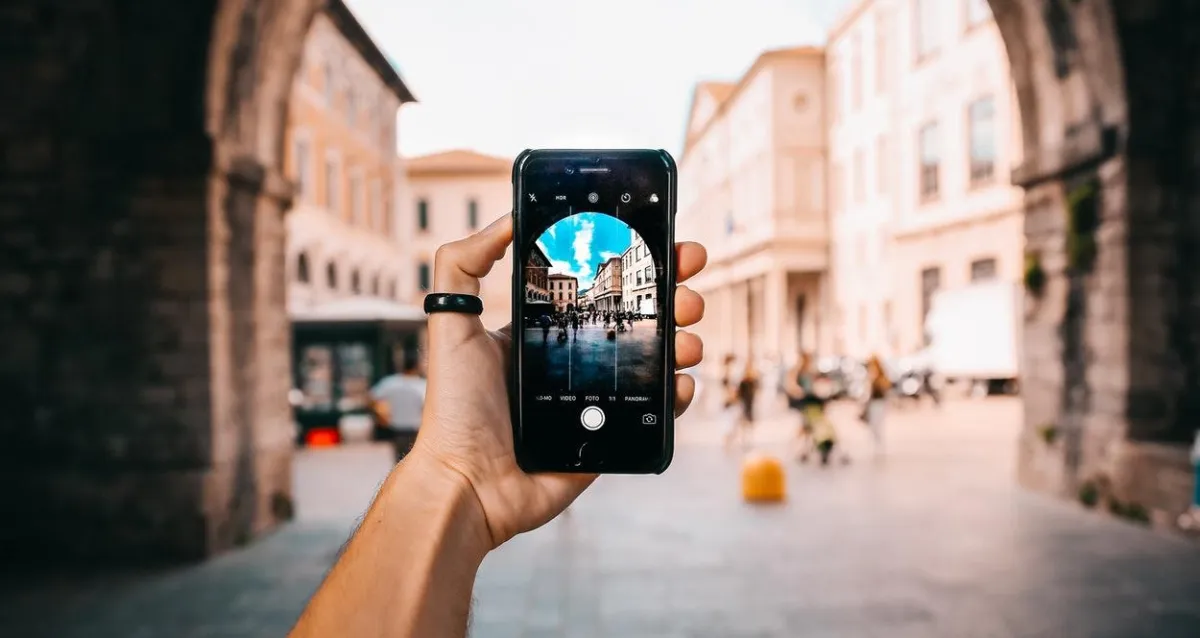
Mobile Photography: 10 Tips for Incredible Photos
The Basics: More Than Just Point and Shoot
Nowadays, we all have a fantastic camera in our pocket. Smartphone technology has evolved so much that you no longer need a professional camera to capture moments with impressive quality. However, a good photograph is much more than simply pointing and shooting in automatic mode. With some simple techniques that anyone can learn, you'll transform your photos from "okay" to "wow." Forget blurry, dark, or uninteresting images. It's time to take control and make the most of your phone. Shall we?
1. Clean the Lens. Always.
It might seem like the most basic tip in the world, but it's the most important and the most forgotten. Your phone spends the day in your pocket, bag, or hands. The camera lens accumulates dust, fingerprints, and all kinds of dirt. A dirty lens results in blurry photos, with smudges or a strange glare. Before each photo, make it a habit to wipe the lens with a microfiber cloth (like the one you use for glasses). You'll notice an immediate difference in sharpness. Don't use your t-shirt, as it can leave lint or even scratch the lens in the long run.
2. Light is Your Best Friend
Photography literally means "writing with light." The quality of light is the factor that most influences the final result. Avoid your phone's flash at all costs. It creates a harsh, direct light that flattens faces, creates ugly shadows, and red eyes. Instead, learn to use natural light to your advantage. If you're indoors, move closer to a window. If you're outdoors, avoid midday sun, which creates very harsh shadows. The best times to photograph are the so-called "golden hour": the first hour after sunrise and the last hour before sunset. The light is softer, warmer, and creates a magical atmosphere.
3. Forget Digital Zoom
The temptation to zoom in to get closer to something far away is great, but resist. Most phones use digital zoom, which is not a true zoom. What the software does is simply crop the image and stretch it, which results in a brutal loss of quality. The photo becomes pixelated and lacks detail. The solution? Walk! Move and physically get closer to your subject. If that's not possible, take the photo without zoom and crop it later during editing. The exception is newer models with optical zoom, which use different lenses to magnify without losing quality. If photography is a priority for you, one of our verified used phones can give you access to this technology at a more affordable price.
4. Focus on the Right Spot
Don't let your phone decide what's important in the photo. By default, it tries to focus on what's in the center or what seems most prominent. To have full control, tap your finger on the screen, exactly on the spot you want to be sharpest. Whether it's a person's eye in a portrait or a flower in a garden, by tapping the screen, you're telling the camera: "This is the most important thing." On most phones, when you tap to focus, a small sun or light bulb also appears. If you slide your finger up or down, you can adjust the brightness (exposure) of the photo before taking it.
5. The Rule of Thirds for Strong Composition
An interesting composition guides the eye and makes the photo more appealing. The most famous technique is the "rule of thirds." Imagine the screen divided by two horizontal and two vertical lines, creating a 3x3 grid. You can activate this grid in your camera settings. The idea is to place the most important elements of your photo not in the center, but along these lines or at the points where they intersect. For example, when photographing a landscape, align the horizon with the bottom or top line, instead of putting it in the middle. You'll see that your photos instantly become more dynamic and professional.
6. Look for Different Lines and Perspectives
The world is full of lines: roads, train tracks, fences, walls. Use these "leading lines" to guide the viewer's eye into the image, towards your subject. Another way to make your photos unique is to change your perspective. Most people photograph at eye level. Try crouching down and shooting from a low angle to give a sense of grandeur, or climb to a higher point and shoot from above for a different overview. Don't be afraid to experiment with unusual angles.
7. Portrait Mode Isn't Just for People
The famous "portrait mode" (or "dynamic focus" on some models) is fantastic for creating that professional effect where the subject is in focus and the background is blurred (the so-called bokeh effect). But don't limit it to portraits of people! It works beautifully to highlight any object: a plate of food, a flower, your pet, or even a cup of coffee. It's an excellent way to isolate your subject from its surroundings and give it all the prominence.
8. Explore Pro Mode (Without Fear)
Almost all smartphone cameras have a "Pro" or "Manual" mode that gives you control over settings like ISO (light sensitivity), shutter speed (exposure time), and white balance (color temperature). It might seem intimidating, but it's simpler than it looks. You don't need to master everything at once. Start by experimenting with white balance to correct colors (for example, so that a white wall actually looks white and not yellowish under artificial light).
9. Light Editing Works Wonders
A good photograph rarely comes out perfect straight from the camera. A little editing can make all the difference. You don't need complicated programs. The photo editor that comes with your phone allows you to make essential adjustments: increase the brightness a little if the photo is dark, add contrast to give it more "punch," or slightly increase saturation to liven up the colors. The golden rule is: less is more. The goal is to improve the photo, not transform it into something artificial.
10. Accessories That Help (But Are Not Mandatory)
If you want to take your photography a little more seriously, there are accessories that can help. A small flexible tripod is cheap and super useful for keeping your phone stable in night photos, long exposures, or for taking a group photo where you also want to appear. At iCase, you'll find some practical options that can help you stabilize your images and videos.
Practice, Practice, Practice
The best tip of all is this: practice. Grab your phone and take photos every day. Experiment with these tips, see what works best for you, and develop your own eye. Photography is a form of expression and, above all, fun. And if you feel that your current phone's camera no longer keeps up with your creativity, maybe it's time for an upgrade. Visit our store in São João da Madeira or check our website to see our verified used smartphones, all checked and with warranty. If, on the other hand, the problem is a broken camera glass or a module that has stopped focusing, our repair service can solve that quickly. Happy shooting!
Ready to equip your smartphone?
Cases, chargers, screen protectors, and much more — with expert advice and fast shipping.