
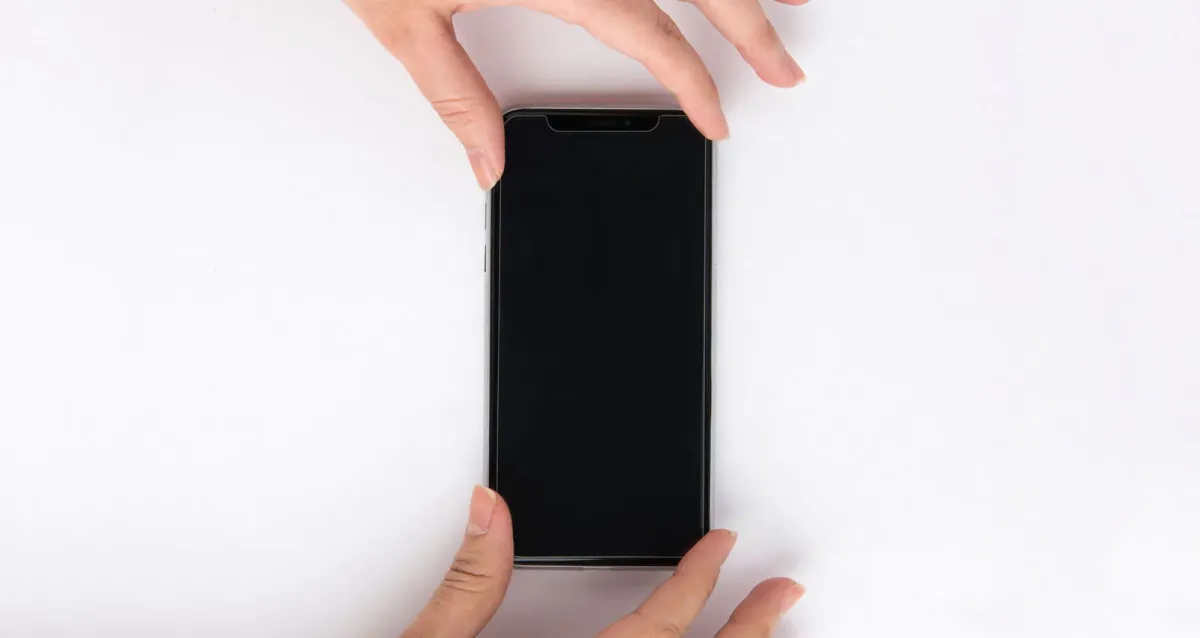
Glass screen protectors: the complete guide to protecting your smartphone screen
A one-meter drop can turn a pristine smartphone into a three-digit repair. The good news is that the right protection costs little more than a coffee a month and takes five minutes to apply. In this guide, we explain the types of glass screen protectors available, how to choose the right one for your phone, and how to apply it bubble-free.
What do 9H and 11D mean?
9H is the hardness rating of tempered glass on the pencil hardness scale — the highest level available for screen protectors. In practice, this means keys, coins, and sand in your pocket are unlikely to scratch the surface. The designation 11D (or full glue) indicates a screen protector with adhesive across the entire surface and curved edges, covering the screen from edge to edge, with no gaps for dust to enter.
A good example is the 11D Anti Static Glass Screen Protector for iPhone 17 Pro Max (€9.90): full coverage, anti-static treatment for easy application, and minimal thickness compatible with virtually all cases. For Android, the 11D Glass Screen Protector for Samsung S26 (€7.50) serves the same purpose.
Anti-spy: privacy on public transport and in the office
Anti-spy (or privacy) screen protectors darken the screen for those looking from the side — you see everything perfectly from the front, but your train neighbor only sees a dark screen. They are ideal for those who work in shared spaces or travel frequently. At iCase, you'll find the Anti-Spy 9H Glass Screen Protector for iPhone 17/17 Pro (€12.90) and the Anti-Spy 9H version for Samsung S26 Ultra (€12.90).
Not just for phones
Tablets also benefit — greatly — from tempered glass, especially at home with children or for those who use their tablet for work. The Glass Screen Protector for Samsung Tab S10/S10 FE (€14.90) is also compatible with the S9 FE, A9 Plus, S11, and A11 Plus models, making it a versatile choice. And for more affordable ranges, there are options like the glass screen protector for the Xiaomi Redmi Note 15 4G/5G (€7.50), which includes a microfiber cloth.
How to apply bubble-free, in 5 steps
- Prepare the environment: a bathroom after a hot shower has less dust in the air — it's a professional trick.
- Clean the screen thoroughly with the wet wipe and then with the microfiber cloth, until not a single particle remains.
- Use the guide stickers (or the dust remover sticker) to align the screen protector with the camera and button before releasing it.
- Lay it down from the center outwards: the adhesive will spread on its own. If a bubble appears, push it towards the edge with a card wrapped in the cloth.
- Do not remove and reapply more than once — the adhesive loses effectiveness and accumulates dust.
When should you replace the screen protector
If the screen protector cracked or developed a fissure, it did its job: it absorbed the impact instead of the screen. Replace it immediately — a cracked screen protector loses resistance, and the shards can cause injury. The same applies to deep scratches that distract from reading or peeling at the edges.
In summary
For between €7.50 and €14.90, you protect the most expensive component of your smartphone. Choose 11D for full coverage, anti-spy if privacy is a priority, and always confirm the exact phone model before purchasing. At the iCase store, you'll find screen protectors for iPhone, Samsung, Xiaomi, and tablets, with fast shipping nationwide.
Ready to equip your smartphone?
Cases, chargers, screen protectors, and much more — with expert advice and fast shipping.